
Why Leadership Growth Is Uncomfortable
Parallels between Bodybuilding and Leadership Growth
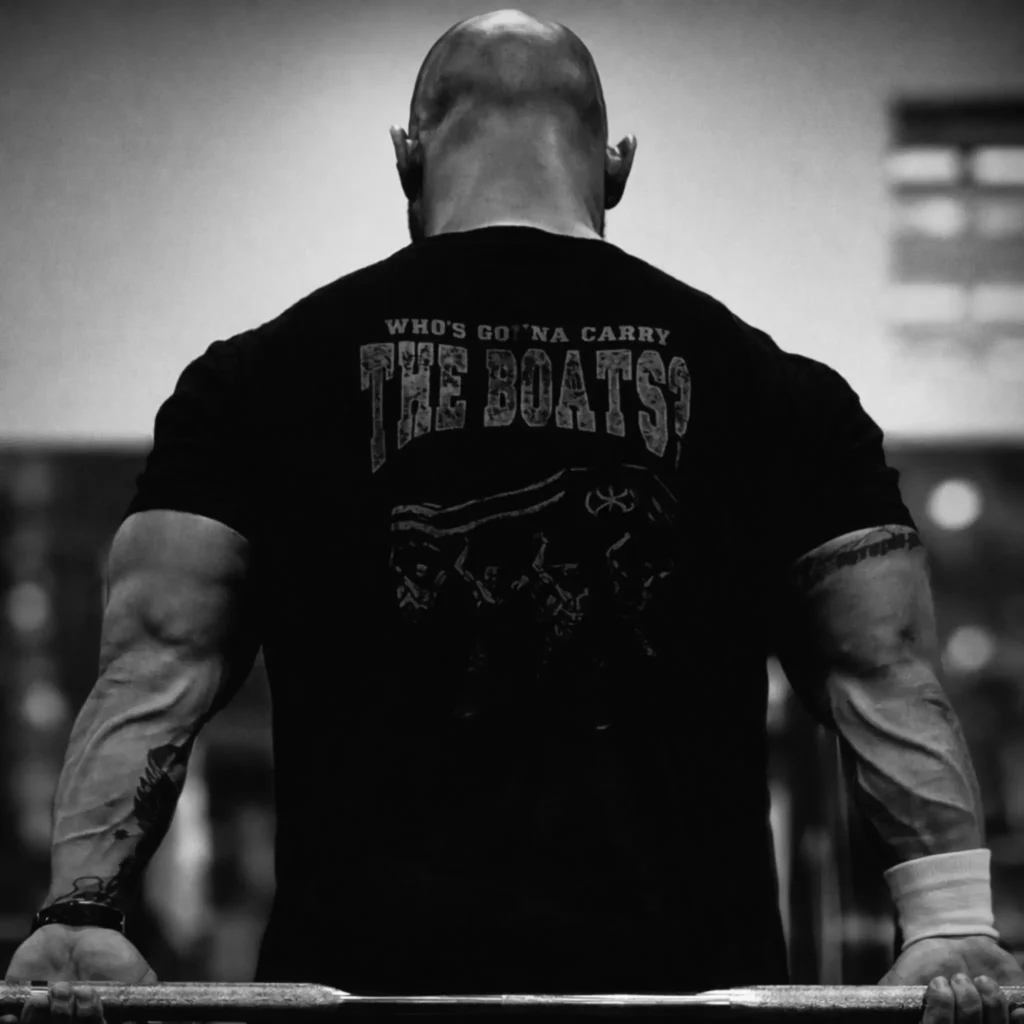
Discomfort Is the Price of Admission
In bodybuilding, discomfort is not incidental, it is the signal that muscle is being asked to adapt. Heavy weights strain tissue beyond its current capacity, creating the conditions for growth.
Leadership growth works the same way. Difficult conversations, uncertainty, accountability, and feedback that challenges your self-image all produce psychological discomfort. Deeply thinking about your approach to challenges, your purpose, meaning, and what you truly want, is unsettling, and necessary. If you are never uncomfortable, you are not growing.
But there is a critical caveat. In the gym, uncontrolled or excessive stress leads to injury, not strength. Without sufficient nutrition and recovery, the nervous system and muscle cannot repair, and thus cannot grow. The same is true psychologically. Unprocessed discomfort in leadership produces burnout, defensiveness, rigidity, or ego inflation. Stress must be paired with recovery. Discomfort is necessary, but insufficient on its own.
Progressive Overload and New Challenges
Muscle will not grow if the stimulus remains constant. Lifting the same weight indefinitely produces maintenance, not development. To grow, you must progressively increase the load: more weight, more volume, more intensity.
Leadership follows the same principle. Growth requires progressively heavier responsibilities: larger decisions, higher stakes, more complex human dynamics. Avoiding challenge preserves comfort, but it caps capacity.
Here’s where the parallel deepens. Muscle growth begins with microscopic damage caused by intense effort. The muscle fibre breaks down under load and the central nervous system strains. It becomes stronger not during lifting itself, but during the repair that follows.
In leadership, breakdowns take the form of failure, conflict, or pressure that exposes limits in your thinking or behaviour. These moments disrupt old patterns and force you to adapt, to become more resilient. But adaptation occurs when the experience is processed, integrated, and rebuilt into a stronger internal structure. Without that integration, the breakdown remains just damage.
Rest, Recovery, and Reflection
Muscle does not grow during training. It grows during rest. Elite bodybuilders understand this so well that 1978 Mr. Universe Mike Mentzer famously emphasised the “exercise of restraint”, knowing when not to train. Overtraining leads to breakdown, not progress.
For leaders, recovery is not merely time off. It is reflection. Growth comes from slowing down enough to extract meaning from experience. Without recovery, effort degrades performance rather than improving it. If training is experience, reflection is adaptation. The question is not just what happened, but what it revealed, what it required, and what must change as a result to achieve higher performance.
Beyond reflection, recovery includes mindfulness. Sitting alone free of distraction, walking in nature without a phone, quiet non-judgmental contemplation, or even intense physical activity, allows the mind to decompress. What is important here is not filling the mental space with mindless entertainment. While there may be a place in your life for social media doom-scrolling and Netflix, it is not during purposeful quieting of the mind.
Writing as the Gold Standard Protocol
Writing and journaling are the most effective reflection protocols because they slow thinking, force clarity, expose contradictions, and reveal patterns over time. You can only write or type so fast and thus you must slow down to articulate your thoughts. Writing turns raw experience into insight. It demands structure and coherence, separates emotion from interpretation, and makes implicit assumptions visible.
Thinking alone is imprecise and can lead to unproductive rumination: playing an event over and over in your mind, often critically and judgmentally. Brain dumping your thoughts on paper can provide a mental relief valve giving you the necessary cognitive space to test vague or contradictory ideas.
It’s why bodybuilding gyms have mirrors: to check your form. Honest writing shows you what is actually happening, not what you believe is happening. It creates distance from the experience, holding a mirror to yourself, allowing you to see it more clearly.
Over time, a written record becomes invaluable. A serious bodybuilder keeps a training log that explicitly ties exercises, sets and reps to progress. Similarly, with journaling you begin to notice recurring patterns: the same fears surfacing in different situations, the same avoidance behaviours, the same gap between intention and action. What was invisible in the moment becomes undeniable on the page.
Coaching Is the Workout; Writing Is the Recovery
Coaching conversations create stimulus. They interrogate your thinking, surface blind spots, and introduce new frameworks. But the integration happens afterward, in the space between sessions.
A leader who invests in coaching without reflective writing is like someone who trains hard but neglects sleep and nutrition. Progress may occur, but it will be slow, fragile, and prone to plateau. Writing between sessions is where coaching compounds.
Written reflection creates accountability that is internal rather than performative. In a coaching session, there is often a subtle performance element: you are presenting yourself to another person. In private writing, you confront yourself with evidence, not excuses. The well-kept training log does not lie.
Identity Emerges from Repeated Action
You do not become a leader and then act like one. You act with accountability, you show up, consistently, until leadership becomes part of your identity. It is why leadership is a skill not a job title. Anyone, at any level of an organisation, can be a leader. What you actually do matters more than what you say you’ll do. As six-time Mr. Olympia Dorian Yates put it: “Say less, do more.”
Leadership is not something you do when conditions are perfect. Much like training still happens when you don’t feel like it, true leaders consistently act their values; especially when conditions are less than ideal, the information is limited, the resources sparse, and uncertainty is high. That is when leadership becomes embodied rather than performed.
This is why writing matters beyond the immediate insight. It tracks the accumulation of small changes. It records the moments when you chose differently. Over months and years, those records become proof, not to others, but to yourself.
You Can’t Outsource the Lift
No one else can lift the weights for you. A trainer can design the program, correct your form, and push you harder than you would push yourself. But the adaptation is yours alone. The hardest parts of bodybuilding are often not in the gym. Athletes come to love the physicality. Rather, it’s in the other twenty-three hours of the day. It’s less about what you’re willing to do, and more about what you’re willing to give up: the late nights, the junk food, the beers.
The same is true of leadership growth. Coaches can guide, mentors can advise, peers can support. But the individual must sit in the discomfort, do the reflection, and integrate the change. While executives may thrive on the physicality of hard work, long hours, more calls and meetings, are they willing to turn inward and ask the hard questions? Growth is participatory, or it doesn’t happen at all.
Muscle building and leadership may seem worlds apart, but they obey the same rules. Stress must be sufficient but controlled. Recovery must be intentional and is as important as effort. And identity emerges from repeated, integrated action over time.
So, why is leadership growth uncomfortable? Because all growth is uncomfortable. Whether pushing the last rep in the gym or unpacking a difficult conversation in the journal, the mechanism is the same: going beyond your capacity. On the other side lies adaptation through the process of growth.
Read more: my thinking