
Cultural, Schmultural What Actually Moves the Needle in Cross-Cultural Leadership
The (not so) secret high leverage leadership behaviours
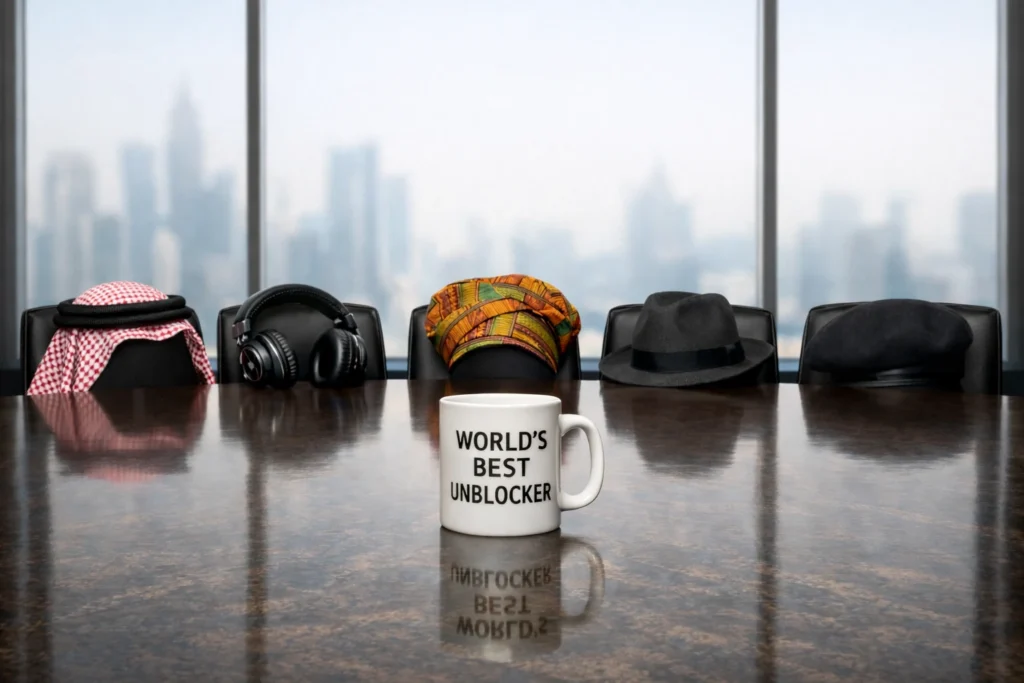
‘The way things are done around here.’ That’s how culture is simply described. A mix of behaviours and attitudes with a dash of values, a sprinkle of national history and beliefs, and sometimes a side of art and society and elite status signalling. When I first moved from Australia to England it felt foreign. Even though I spoke the language, things were, well, different. Granted, I was severely jet-lagged, it was my first experience abroad, and I was in the southwest counties, not the multicultural metropolis of London, so that undoubtedly filtered the experience.
Quickly what I understood, though, was we were more the same than different. Sure, my colleagues would ask ‘you alright?’, instead of ‘how’s it going?’ And their beer was mud hued and headless. Not to mention the weather. As I traveled further afield, to Europe, then Ukraine, the Middle East and Southeast Asia, I noticed the same thing. While the languages were vastly different, sometimes the outfits were too, but in all my business dealings with chief executives and political leaders, there was universal common ground.
Hand over a business card with two hands in Asia, I was told. Yet when I arrived in Singapore, few Asians did. Most were offered very casually. There was no tea ceremony. Then I was told Asians don’t give a straight answer, they rarely say ‘no’ to your proposal for they want to ‘save face.’ Maybe true, but I noticed this in the Middle East, in Central Europe, the Caribbean, and Africa. I suspect it’s because nobody likes to say ‘no.’ It’s uncomfortable. We all mostly rather ignore than confront. Less a cultural thing. More a human thing.
Reality check. We work in a digitally connected, 21st century globalised business environment where today cross-border and remote work is an increasing part of organisational culture. An entire generation is digitally native and has never known work life that is not screens and WiFi. In the mid-1970s, about 31 percent of the world population lived in big cities, now it’s 45 percent. Then there were 8 mega-cities on earth, now there’s 33. Fifty years ago, 2.2 percent of the world population lived abroad, about 85 million people. In 2026, that’s closer to 3.7 percent or 310 million. In some countries, in the Gulf Cooperation Council for instance, the population is over 75 percent foreign.
For modern business leaders in multinational corporations staffed with multicultural educated professionals, what moves the needle for team performance? What culture is actually important and mutable?
Culturally Relevant Data for A Culturally Contrarian Story
The GLOBE study examined 17,000 middle managers across 62 countries. It remains the largest cross-cultural leadership and organisational behaviour research project ever conducted. The researchers asked: what do people across cultures want from their leaders? They found a universal cluster of leadership attributes endorsed positively across every single culture studied. Integrity. Vision. Inspiration. Decisiveness. Performance orientation. These are not culturally specific. They sit at the top everywhere.
Read that again. Across 62 countries, people want leaders with integrity, vision, inspiration, decisiveness, and a performance orientation.
The study identified three leadership styles preferred universally: Charismatic and Value-Based, Team-Oriented, and Participative leadership. Of these, charismatic (transformational) leadership scored highest. This suggests a universal human desire for leaders who provide meaning and direction.
A follow-up study of 1,000+ CEOs across 24 countries confirmed that the behaviours driving team and firm performance were identical: charismatic leadership, vision, integrity, performance orientation. Autonomous and self-protective leadership were universally ineffective. No cultural exceptions.
What does that mean?
Whether the leader is moving from Malaysia to Germany or from Norway to Dubai, team members will expect them to demonstrate these same attributes. People want to be inspired in their work. When a leader can paint a vivid vision, and set clear goals, then teams can find purpose. Almost everyone accepts the value of performance. We all want to be recognised for a job well done; we all want an ‘attaboy.’ In Agile leadership, this means acting as an unblocker, not a micro-manager, setting objectives and empowering teams to carve their own path to a goal.
And the leaders we almost all don’t like? The self-protective ones. Those who strive to protect their own ego, who come across as insecure, self-serving, and untrustworthy. We recognise this when we see it in people. It’s much worse in leaders because we expect them to take responsibility and look out for others; that is, lead with integrity.
But wait, there’s more.
Transformational Leadership as Culture
A second major study examined whether transformational leadership is perceived and valued similarly across cultures. Researchers surveyed over 200,000 people: leaders and their direct reports. Two findings matter here. First, followers from different cultural groups agreed with their leaders about transformational behaviours to a similar degree. The magnitude of agreement did not vary meaningfully across cultures. Second, followers across all cultural clusters reported equivalent levels of satisfaction with transformational leaders. The positive effect of transformational leadership on follower satisfaction was consistent regardless of culture.
Transformational leadership behaves like a cultural universal. Across cultures, people similarly perceive leaders who engage in transformational behaviours and derive similar satisfaction from such leaders. This goes beyond being appreciated everywhere. It suggests transformational leadership is fundamentally effective across human cultures.
Leverage matters. Focus on what you can control
This is not an argument that culture does not matter. Outside of business, exploring the country, trying the food, visiting the religious sites, and viewing museum artefacts add immeasurably to a new posting. Actively experiencing the culture first-hand resonates on a human level. And it gives you talking points.
Culture matters immensely. It shapes what is acceptable in society. But, there are layers. For an organisation, national culture manifests primarily through law and institutional structure. French labor laws increase hiring costs. Retirement norms shape work attitudes. Tax policy affects take-home pay. These are real constraints and they influence how people think about work. Understanding them is valuable, and they are navigable, but seldom negotiable.
Even within a national culture there can be substantial variation. Consider the axiom that Americans are direct in their communications; ‘telling it like it is.’ Yet, this is not universally true either. New Yorkers have such a reputation, but in the Midwest or the South, polite avoidance is more often the norm. And broad cultural stereotypes ignore generation entirely. Does a mid-career employee in their 40s communicate like a GenZ colleague? Or does a 25-year old in Tokyo have more in common with a 25-year old in Berlin (digitally native, remote-comfortable, direct communication via Slack) than with a 55-year-old in Tokyo.
Team culture, however, is mutable. It is shaped overwhelmingly by the leader’s behaviour, values, and consistency. This is where leverage lives. A leader can choose to demonstrate integrity or not. To provide clear direction and paint a vision or not. To build trust or not. To treat people fairly or not. These choices shape the team environment daily.
In professional MNC environments, with highly educated, professional, goal-oriented teams, shared incentives, standards, and professional norms often outweigh national differences. Friction attributed to culture is frequently better explained by misaligned incentives, unclear communication, or lack of direction. Abstract cultural models have limited predictive power in day-to-day leadership because effective cross-cultural leadership depends more on a leader’s adaptive capability, known as cultural intelligence, than on static national stereotypes.
Leadership development programs recognise this universality in practice. Yes, a German engineer might value analytical debate in a meeting. But, so might a young Singaporean one. The same 360-degree feedback tools are used from Australia to Germany, Abu Dhabi to Singapore. The same coaching frameworks apply. The same leadership training institutions run identical programs across continents. Why? Because the core competencies being developed are not culturally specific.
Adaptive leadership attributes are learnable and applicable over a wider landscape. GLOBE has shown us that visionary, self-sacrificing, inspirational, diplomatic, collaborative, inclusive leaders matter everywhere. These also happen to be very wonderful attributes to aspire to as a friend or a partner.
A second reality check. What is often sold as ‘cultural training’ is simply modern, adaptive leadership skills in a cultural wrapper: ‘Understanding high-context Cultures’ is just active listening, ‘Low-context Expectations’ becomes clear communication, ‘Facing-Saving Norms’ is respecting people’s dignity, and ‘Cultural Sensitivity Training’ in plain English is merely empathy.
The practical question for a time-constrained leader is not what to study but where to focus. Surprise! Universal leadership behaviours that drive performance everywhere. Learn German or Bahasa Melayu. Appreciate French intellectual traditions. Try falconry on the Arabian peninsula. Even throw handfuls of coloured powder everywhere at a Holi festival. Experience the culture of the country if that is your passion.
And as for exchanging cards or giving gifts, remember as Yogi Berra said: you can observe a lot just by watching.
See more: my thinking

© 2025 think provocative. All rights reserved.